Horse Country Zoning, Land Use, Lot Layouts & Value Drivers
February 19, 2026
February 19, 2026
Buying or improving a farm in Wellington’s Horse Country is not like buying a typical acreage home. Zoning, subarea overlays, and even manure‑handling rules shape what you can build and how your property will operate day to day. If you understand those rules early, you protect value and avoid costly redesigns or delays. This guide breaks down local zoning, common lot layouts, and the features that most often drive resale value, with a simple due‑diligence checklist you can use before you write an offer. Let’s dive in.
Wellington created an Equestrian Preserve and an Equestrian Overlay Zoning District (EOZD) to protect equestrian uses, bridle trails, and rural character. The overlay is your roadmap for what is allowed and where. Start with the Village’s overview of the Equestrian community to get oriented.
Jurisdiction matters. Some “Horse Country” parcels sit inside the Village; others are in unincorporated Palm Beach County. That single detail changes which code and permitting office you must use. If you are eyeing a parcel, contact Wellington’s Planning, Zoning & Building Department for an official zoning and land‑use verification.
State rules interact with local code. Florida’s Right‑to‑Farm Act offers protections for bona fide farm operations that follow accepted practices. At the same time, Florida Building Code and fire standards still apply to most structures, including large roof systems. When in doubt, confirm with the building department and review the statute on the Right‑to‑Farm Act.
The EOZD identifies permitted and conditional uses for equestrian properties. Single‑family homes, bona fide agriculture, stables, private arenas, and grooms quarters appear in the permitted or conditional categories depending on location and details. Review the EOZD’s permitted‑uses section early so you know if your intended use is by right or needs a special review.
Stable size is tied to lot size in the EOZD. The code uses a table approach that limits total stable square footage and the number of accessory stable structures based on acreage, with limited administrative variances available. For exact thresholds, check the stables section and Table E in Section 6.10.12. Building permits are required for stables.
Private arenas, open or roofed, are recognized in the code, but covered arenas trigger building and structural standards. In some subareas or planned developments, there are added limits on arena size or roof materials. The Winding Trails hearings offer a useful example of subarea‑specific covered‑arena limits highlighted in local reporting on Winding Trails covered arenas. If you plan a roofed arena, expect engineered design and a full permit review.
Overlay rules interact with neighborhood master plans and recorded covenants. Private CC&Rs can be more restrictive than Village code. Always pull the recorded declarations for your parcel and confirm setbacks, coverage caps, and any architectural requirements before you design.
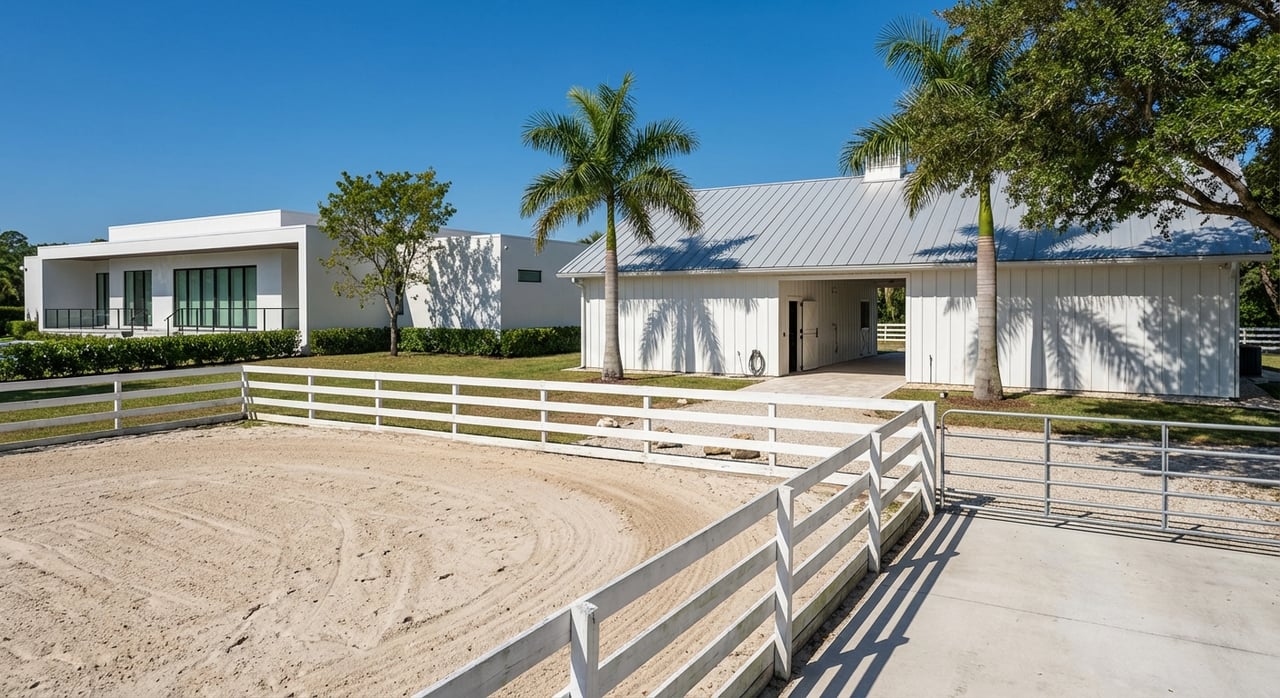
Large equestrian neighborhoods in Wellington often feature 2 to 5‑plus acre parcels, with some areas dominated by 5‑acre sites. Layouts were intended to preserve equestrian use and rural character, so you will see consistent barn and paddock patterns alongside residences.
Most farms separate the main residence from barn activity for noise, odor, and privacy. Stables are commonly sited downwind of living areas when practical. Arena placement must respect setbacks and the buildable envelope, but footing, drainage, wind, and sun angles are just as important. Covered arenas add complexity because of structural design and any subarea limits noted in the permitted‑uses section.
Buyers value safe, well‑drained turnout with reliable water. Post‑and‑rail fencing is often preferred for visibility and safety. Along major roads, Wellington provides hedging and fence guidance, including materials and hedge heights, to preserve the streetscape. Separate barn access and trailer parking protect the residence and make daily operations smoother.
Manure management is regulated in Wellington. Farms must use a permitted livestock‑waste hauler, or implement an approved compost and nutrient‑management program, with disposal at authorized sites. Review the Village’s manure regulations and BMPs and budget for hauling and tipping fees.
Many farms use dual water systems: domestic water for the home and a separate well or pond‑fed system for irrigation and arena watering. In low‑lying areas, drainage planning is essential. Confirm FEMA flood zone status and any elevation or floodproofing needs with the Village’s floodplain maps and guidance. Flood status can influence arena design, barn siting, and insurance.
Short drives to Wellington International, the Global Dressage Festival, and the National Polo Center command a location premium with active competitors and professional programs. These venues sit at the heart of the local equestrian economy, as reflected across Wellington’s showgrounds resources.
Well‑built center‑aisle barns with proper stall sizes, tack and feed rooms, ventilation, and legal grooms quarters tend to sell faster and higher, because they reduce a buyer’s time and capital to reach operating readiness. Stall count and layout also influence boarding and training income potential.
Quality footing, engineered drainage, irrigation systems, and reliable lighting are high‑value features that are costly to replicate. Covered arenas can widen your buyer pool for dressage and show‑jumping programs, but they require permits, engineered wind‑load design, and must align with the EOZD and any subarea caps. Large roof systems typically trigger a structural review consistent with Florida Building Code, which local plan notes reinforce for wind design on projects of scale. See a representative plan‑review note set from West Palm Beach’s portal for context on wind‑load design expectations.
Separate barn gates, trailer turnarounds, and service areas protect the residence and streamline daily operations. Professional buyers look for this kind of circulation planning because it lowers friction for staff, deliveries, and veterinary or farrier access.
A farm with permitted barns, arenas, and manure‑management in good standing is more attractive and reduces closing risk. Unpermitted structures or open code cases are red flags that can affect price and timing. Wellington’s manure regulations and BMPs page is a good place to start documenting compliance.
Work through these items before you go under contract. They shape feasibility, timing, and financing.
You protect value by pairing clear entitlement work with the right capital plan. If a covered arena or barn expansion is part of your strategy, you will want underwriting that accounts for engineering timelines, permit contingencies, and potential subarea reviews. A finance‑savvy team can structure loan terms around those milestones and negotiate price and repairs with clean permit deliverables.
If you are considering a Wellington farm or repositioning an existing one, let an integrated advisory team coordinate zoning checks, improvement scope, and financing from day one. For a confidential conversation about your goals, connect with Miami Brokers Group to request a private valuation and consultation.
Stay up to date on the latest real estate trends.
Etiam non quam lacus suspendisse faucibus interdum. Orci ac auctor augue mauris augue neque. Bibendum at varius vel pharetra. Viverra orci sagittis eu volutpat.