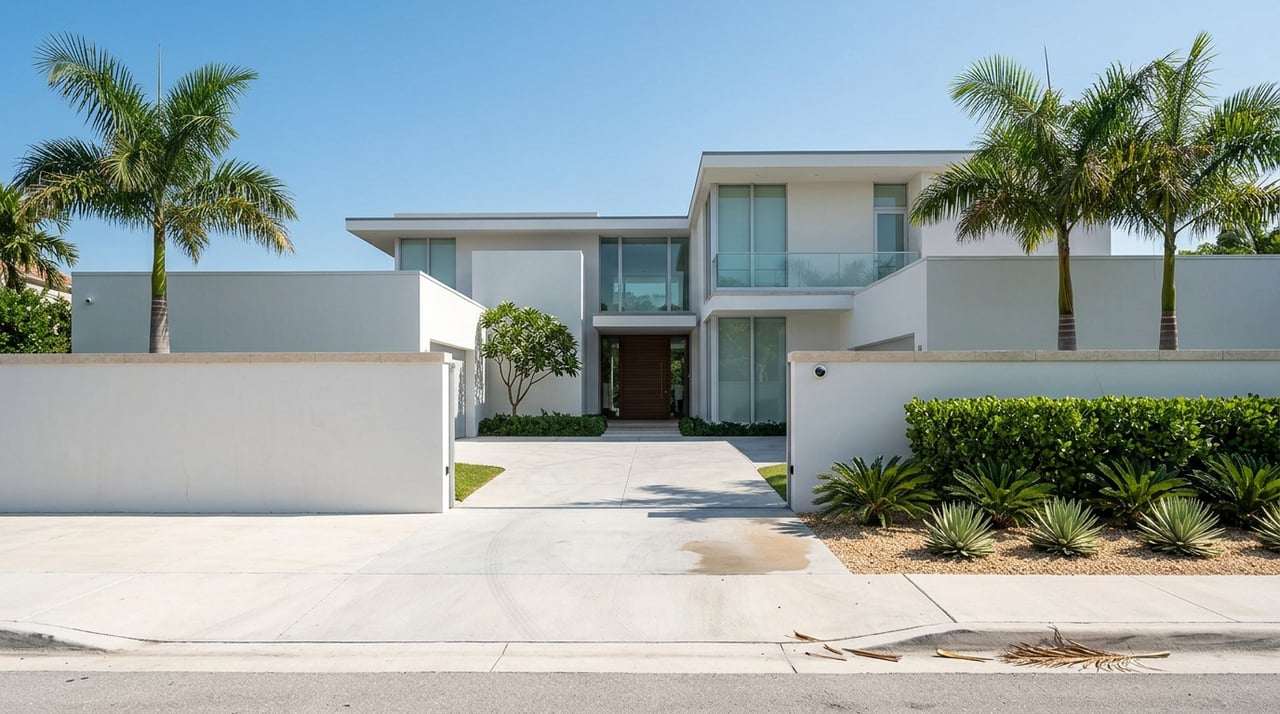
Cocoplum Gated Community Overview for Buyers
June 25, 2026
June 25, 2026
What does “living in Cocoplum” actually mean? If you are searching for a gated waterfront home in Coral Gables, the answer is more layered than many buyers expect. Cocoplum is not just one simple subdivision with one fee and one set of rules, and understanding that upfront can help you avoid confusion later. In this guide, you’ll get a clear look at how Cocoplum is structured, how waterfront access works, and what to verify before you buy. Let’s dive in.
Cocoplum is best understood as a collection of related gated waterfront enclaves rather than one uniform neighborhood. City records distinguish Cocoplum I from Cocoplum II, and identify Cocoplum II as Islands of Cocoplum. That distinction matters because listings, permits, and legal documents may not all use the same naming convention.
City documents also reference entrance features at Cartagena Plaza, at Cocoplum Road and Los Pinos Boulevard, and near the Cocoplum Road Bridge by Vera Court. In practical terms, you may see different labels used in marketing materials even when homes are part of the broader Cocoplum area. That is one reason why buyers should verify the legal description of a property instead of relying on neighborhood branding alone.
In Cocoplum, public records often identify a property by section and plat rather than by a simple neighborhood name. Examples in city records include Cocoplum Section 1, Cocoplum Section 2 Plat B, and Cocoplum Section 2 Plat F. Those details are often the most precise way to confirm what parcel is actually being sold.
If you are comparing homes, this matters more than it may seem. Two properties can both be described as being in Cocoplum, yet fall under different sections, records, or improvement requirements. For a high-value purchase, accuracy at the legal-description level is essential.
The waterfront lifestyle is a major reason buyers focus on Cocoplum. According to the HOA, Islands of Cocoplum includes 302 estates, including 172 waterfront residences. That means the community includes both interior homes and waterfront homes, and the ownership experience can differ depending on which type of property you buy.
For buyers drawn to boating or bay access, the waterfront segment is usually where the most detailed due diligence is needed. A waterfront address does not automatically mean the same dock setup, boat access, or marina rights as another waterfront property nearby. Those details should always be confirmed with the property records and applicable approvals.
One of the biggest misconceptions about gated waterfront communities is that house ownership and boat access are always bundled together. In Cocoplum, that is not necessarily the case. The Cocoplum Yacht Club operates as a separate private marina with almost 200 slips ranging from 40 to 120 feet.
The yacht club’s current slip inventory includes both rentals and sales, which shows that dockage can function as a separate asset from the home itself. In other words, owning a waterfront house in Cocoplum is not the same thing as automatically owning a marina slip. If boating is central to your plans, this is a key distinction to clarify early.
For many buyers, the appeal of Cocoplum goes beyond the home and the water. The HOA’s amenity list includes:
The clubhouse can also be reserved by residents for events. Together, these features help define the day-to-day lifestyle many buyers associate with Cocoplum living.
One of the most important parts of evaluating a Cocoplum property is understanding that there may be multiple fee tracks. Buyers often assume there is just one HOA payment, but public records show the picture can be more complex.
Miami-Dade references special districts tied to Cocoplum services, including street lighting and security guard functions. These types of charges are billed as non-ad valorem assessments on the annual property tax bill. They are separate from a conventional HOA fee and should be reviewed as their own line items.
That difference is important because special district charges are not just informal neighborhood costs. Miami-Dade states that these assessments can become liens against a property. For a buyer, that means the total carrying cost of ownership should be evaluated with care.
A useful way to think about Cocoplum is to separate the property into layers. First, there is the house itself. Second, there may be HOA-related costs. Third, there may be municipal special-district assessments billed through the tax bill.
For some buyers, there may also be a fourth layer: marina-related costs. Keeping these categories separate helps you compare properties more accurately and avoid combining unlike expenses into one vague number.
Here is a simple breakdown:
| Cost Category | What It Covers | Where It May Appear |
|---|---|---|
| Home ownership costs | The real property itself | Purchase contract and property records |
| HOA-related charges | Community association operations and amenities | Association disclosures |
| Special district assessments | Services such as lighting, security, landscaping, or capital improvements | Annual property tax bill as non-ad valorem assessments |
| Marina or slip charges | Slip ownership or rental obligations | Yacht club paperwork and related disclosures |
If you are considering a slip through the Cocoplum Yacht Club, it is important to treat that as a separate financial decision. The yacht club’s requirements include a $30,000 initiation fee for each slip purchase and a $3,000 fee for each rented slip. It also lists a $1,300 quarterly maintenance assessment, a $100 monthly tenant operational fee, liability insurance requirements, and additional estoppel and termination fees.
That cost structure makes slip ownership or rental materially different from simply buying a waterfront home. It can still be highly appealing for the right buyer, but it should be underwritten separately from the house. This is especially important in luxury transactions where dockage may influence value, use, and long-term plans.
If you are buying a waterfront property and planning changes, permit requirements matter. The city’s permit handbook states that for projects in Cocoplum Section II, a copy of the dock plan is required along with site-plan materials and county environmental approval for dock or mooring work. That means waterfront improvements should never be assumed based only on listing language.
Instead, your review should focus on the legal description, existing permit file, and supporting plans. This helps confirm what is already approved, what may need additional review, and whether the property aligns with your intended use. In a neighborhood where waterfront details can affect both lifestyle and value, this step is especially important.
For buyers who want clarity, Miami-Dade’s property tools are a practical starting point. The county notes that non-ad valorem assessments can be reviewed by folio, and public records may include property cards, photos, building sketches, and tax-roll information. Recorded documents are handled separately through the Clerk of Courts.
This matters because a polished listing may not break down every cost with enough precision. If you want to understand whether a charge is tied to an HOA, a special taxing district, or a marina obligation, folio-based record review is often the best first step. In Cocoplum, detail work pays off.
If you are seriously considering a home in Cocoplum, it helps to approach the purchase with a structured checklist. This is particularly true for waterfront and high-value estate properties, where small differences in rights, fees, and approvals can have a meaningful impact.
Before closing, consider confirming:
This kind of review helps turn a beautiful listing into a fully understood investment decision.
Cocoplum continues to draw interest because it combines gated privacy, waterfront orientation, and a strong amenity package within Coral Gables. For many buyers, that mix is hard to replicate. The combination of estate homes, marina access options, and established community infrastructure creates a distinctive ownership profile.
At the same time, Cocoplum is not a plug-and-play neighborhood where every property offers the same experience. The value is in the details, and buyers who understand the structure of the community tend to make more confident decisions. In a market like Coral Gables, that level of precision matters.
The clearest way to understand Cocoplum is as a layered system. It includes gated subareas, interior and waterfront estate homes, separate marina access, and multiple categories of fees or assessments. Once you see those layers clearly, the neighborhood becomes much easier to evaluate.
If you are exploring a purchase or preparing to sell in Cocoplum, working with an advisor who understands both the micro-market and the financial structure of the deal can make the process much smoother. For private guidance on Cocoplum and other Coral Gables luxury properties, reach out to Miami Brokers Group for a confidential consultation.
Stay up to date on the latest real estate trends.





Etiam non quam lacus suspendisse faucibus interdum. Orci ac auctor augue mauris augue neque. Bibendum at varius vel pharetra. Viverra orci sagittis eu volutpat.