The Cocoplum Marina Is Running Two Clocks Right Now, and Only One of Them Is About Storms
September 10, 2026
September 10, 2026
It's early September, and the guard shack on Prado Boulevard is waving boats through like it does every evening in late summer. Down at the marina, someone is double checking a weather app between sips of coffee. Someone else, three docks over, is already talking about traps. Both conversations are happening at the same railing, sometimes in the same breath, because right now Cocoplum's marina is doing two jobs at once. One is about riding out whatever the tropics send this month. The other is about getting a boat out to open water the moment Florida's stone crab season opens on October 15. Most people who don't live behind this gate assume the marina is a single amenity, a nice place to keep a boat. Residents know it's actually running on two separate calendars that happen to share the same channel.
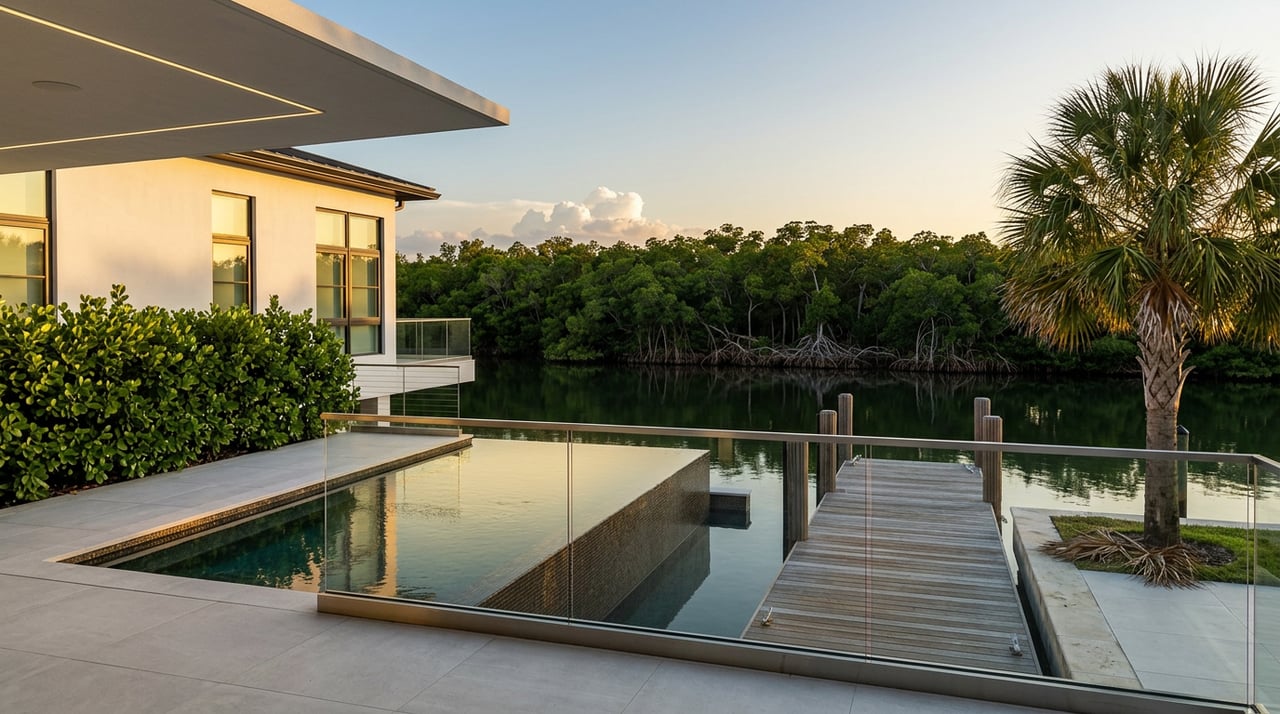
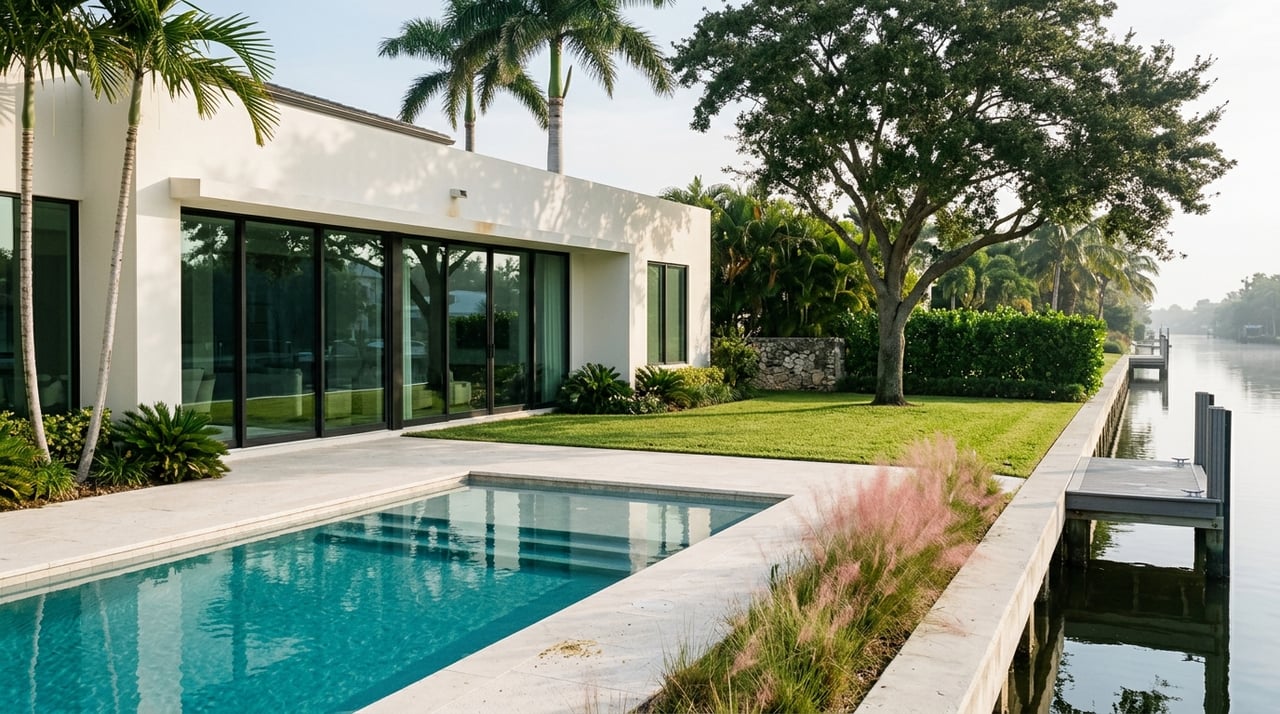
The reason both calendars work here comes down to one piece of geography that's easy to miss from a listing photo. Cocoplum Yacht Club sits directly on the Gables Waterway, which feeds straight into Biscayne Bay. Coral Gables has nineteen vehicular bridges crossing its waterways, and boats docked further up those same canals have to time their departures around at least one of them before they ever reach open water. Boats leaving Cocoplum don't. The marina's position means a vessel can clear the gate, idle through the mangrove-lined basin, and be in the Bay in minutes, with no bridge schedule to work around and no draft restriction to think about.
That sounds like a convenience feature until you realize it's the same structural fact doing double duty. A bridge-free run to open water is exactly what you want when a storm forces an early exit toward safer harbor, and it's exactly what you want six weeks from now when the traps go in and everyone's trying to be first on the Bay at first light. The marina isn't two different assets pretending to be one. It's one channel that gets used two ways depending on the month.
Coral Gables' police department has said publicly that hurricanes are the single biggest recurring issue their marine unit deals with each year, more than theft or vandalism on the hundreds of boats sitting idle for months at a time. What's less obvious, unless you've lived through a storm watch here, is that the department has specifically pointed to the mangrove growth around Cocoplum as the spot boaters across the city try to tuck into when a storm threatens. The tangle of mangroves along the marina's edges breaks up chop and surge in a way open canals don't, which makes this particular stretch of water more forgiving than most when conditions turn.
That reputation is also why the yacht club runs its own hurricane protocol rather than leaving it to guesswork. The club's published guidance is specific enough that it reads more like a checklist than a suggestion:
None of that is decorative. It's the actual mechanics of what happens at this address every time a storm enters the forecast, and it's why residents talk about hurricane season here less as an abstract threat and more as a recurring logistics exercise involving their neighbors.
The marina holds close to 200 slips, ranging from about 40 feet up to 120, all privately owned rather than leased month to month from the club. That's worth sitting with for a second, because a few minutes away, the county-run Matheson Hammock Marina tells a very different story. A Coral Gables Magazine feature on the city's boating culture, reported in 2020, found that Matheson Hammock's roughly 243 slips were entirely spoken for, with new vacancies opening rarely enough that the estimated wait for one stretched three to five years.
The comparison matters for anyone actually living behind Cocoplum's gate, not because it's an investment pitch, but because it explains something about daily life here that's easy to take for granted. Dockage isn't the scarce, waitlisted resource in this neighborhood the way it is at the public marina up the road. It's built into the rhythm of the place. A slip here comes with a full-time dockmaster, gated access, and a spot to keep a boat ready without the multi-year queue that governs the county option next door.
Florida's stone crab season opens October 15, 2026, and runs through May 1, 2027, with the heaviest hauls typically landing sometime between November and January. What most people outside the fishery don't know is that the season doesn't actually start with a clean starting gun. Commercial trappers are allowed to place their traps in the water up to ten days early, meaning gear can go in as soon as October 5, positioned and waiting, even though nothing can legally be baited or harvested until the 15th.
A few other specifics shape how the season actually plays out on the water:
For anyone keeping a boat at Cocoplum Yacht Club, that same bridge-free run described earlier turns into the fastest way to get gear on the water before sunrise on the 15th. The channel that gave boaters an edge getting to safety in September gives them an edge getting to the Bay in October. It's the same water doing what it's always done here, just in service of a completely different kind of urgency.
Live here long enough and you stop thinking of the marina as an amenity and start thinking of it as infrastructure with a schedule. Late summer means checking line lengths and knowing which neighbor's boat is tied off next to yours. Early fall means checking trap registrations and figuring out who's heading out first on the 15th. Both routines run through the same gate, the same dockmaster, and the same stretch of the Gables Waterway that never makes you wait on a bridge.
That's the version of Cocoplum that doesn't show up in a listing photo, and it's the one that actually explains why people who live here plan their falls around the water instead of around a calendar app. Miami Brokers Group works with families across Coral Gables' waterfront enclaves who understand this rhythm firsthand, and we're always glad to talk through what life on a specific dock or canal actually looks like month to month. If you're curious how a property here fits into that pattern, reach out and request a private consultation.
Stay up to date on the latest real estate trends.
Etiam non quam lacus suspendisse faucibus interdum. Orci ac auctor augue mauris augue neque. Bibendum at varius vel pharetra. Viverra orci sagittis eu volutpat.