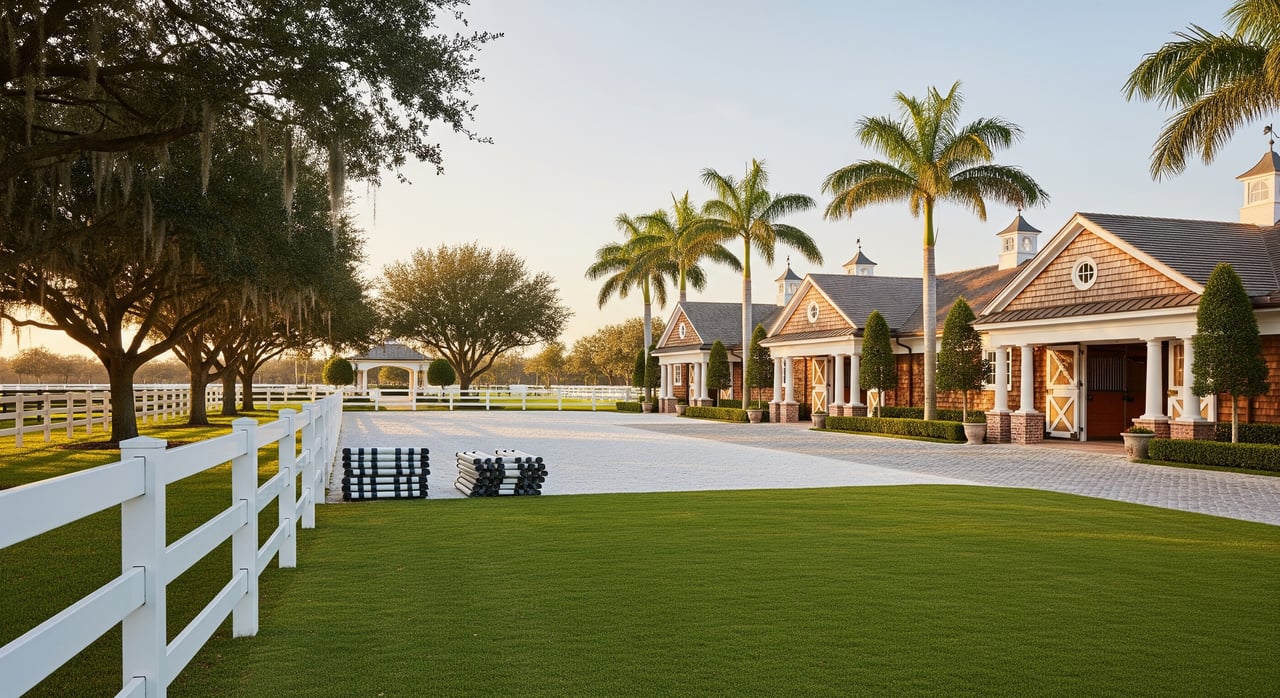
Wellington Horse Country Equestrian Property Essentials
December 18, 2025
December 18, 2025
Shopping for a Wellington horse property can feel very different from buying a typical home. You are balancing stalls, arena footing, drainage, trailer access, and your daily commute to the showgrounds. This guide walks you through the essentials of Horse Country properties in Wellington so you can move forward with clarity. You will learn how acreage, barn design, arenas, drainage, and proximity to show facilities shape your choices. Let’s dive in.
Wellington is one of the largest equestrian communities in the United States, with major winter show circuits and year-round training. Many neighborhoods in the Village of Wellington and nearby unincorporated Palm Beach County are set up for horse keeping. For competitive riders, distance to the primary show complex is a major decision factor.
Lot sizes, improvements, and neighborhood rules vary widely. If a property catches your eye, confirm details through county records or a property appraiser resource. Local event schedules and maps from show facilities also help you understand seasonal traffic and access.
Horse-oriented parcels often range from small estates around 1 to 5 acres to larger equestrian estates with 5 or more acres. Many functioning show-barn properties fall somewhere in the 1 to 10 acre range. Exact patterns depend on neighborhood and zoning, so verify minimum-lot rules and recorded parcel size before you commit.
Acreage affects how many paddocks you can support, the arena size you can build, where manure can be stored, and how private your operation feels. Layout matters just as much as size. Look for simple horse flow from stalls to turnouts, a safe loop or wide drive for trailer turning, and logical placement of hay storage away from ignition sources.
A well-designed barn supports daily care and show-level performance.
You will see wood post-and-beam, block or CMU with wood framing, and prefabricated metal barns. Each has tradeoffs for ventilation, fire risk, and upkeep. In South Florida’s heat and humidity, airflow is critical. High roofs, open eaves, correctly placed fans, and materials that resist mold help protect horses and people.
Common fence types include pipe rail, post-and-rail wood, vinyl rail, and electric. Evaluate visibility, durability, and maintenance needs, and confirm any local fence ordinances. Turnouts should provide enough space per horse and access to shade or shelter. Near barns, expect soil compaction and plan for basework that helps with drainage and hoof health.
Safe, simple access matters every day. Confirm that trailer turning radius, driveway width, and parking fit your vehicles. Look at driveway and farm road surfaces for durability and drainage. Check whether the property uses septic or sewer, and whether water is from a well or municipal system. Electrical service size should support lighting, fans, irrigation controls, and any specialty equipment.
South Florida’s high water table and heavy rainfall make drainage a priority. Grading, swales, subsurface drains, and well-built arena bases are worth close inspection. Many properties fall within mapped floodplain areas, so it is standard to review FEMA flood layers and county flood information. Verify how a site sheds water during a typical storm, and look for evidence of standing water or saturated footing after rain.
Manure handling and runoff control are also part of drainage planning. Local guidance from equine-focused agricultural resources can help you evaluate composting, on-site storage, and removal programs that protect soils and waterways. Some neighborhoods or HOAs set rules for storage and removal, so review recorded covenants when present.
A good arena supports your discipline and stands up to the climate.
Footing options include natural sand, silica sand mixes, sand-fiber blends, and specialized products. The goal is a balance of cushion, traction, and drainage suited to your discipline. A quality arena starts with a compacted base and careful grading with subsurface or edge drainage. In Wellington’s climate, drainage is the difference between usable and unusable after storms.
Depth and maintenance vary by footing. Plan for routine dragging or harrowing, periodic top-ups, and watering to control dust and compaction. Lighting should be sized to reduce glare and shadows, and siting should consider morning and evening sun.
For reference, dressage competition rings are 20 x 60 meters, with 20 x 40 meters used for schooling. Jumping needs larger open space and approaches for lines and oxers. Many private arenas are multi-use with removable markers and appropriate drag systems.
Shorter hauls reduce stress on horses, save time, and make it easier to coordinate with trainers and support staff. During peak season, traffic can change effective travel times, so a one-mile drive might still take longer than expected. Measure driving time under typical conditions and verify the routes trainers and haulers actually use. Also confirm showground parking, entry gates, and staging areas for trailers.
An equestrian-focused buyer’s agent starts by defining your non-negotiables: acreage, stall count and size, arena type, fencing preference, flood tolerance, and preferred drive time to the show complex. From there, a clear criteria checklist guides the search.
On-market, agents use MLS filters for acreage and equestrian structures, then review county parcel data and aerial imagery for paddocks, arena footprints, and setbacks. Drive-time analysis helps compare neighborhoods against your training and show schedule.
Off-market, results often come from the local network. Agents stay connected with trainers, stable managers, veterinarians, farriers, and footing contractors who hear about potential sales early. Discreet outreach to owners in target areas is common, as are leads from boarding barns and careful monitoring of public records.
With a boutique team, you can also align search and financing early. If you plan improvements such as a new arena or barn upgrades, a buyer’s agent who coordinates lending can help you evaluate costs and structure financing so the plan is realistic from day one.
Use this short list during property visits:
Severe weather planning is part of horse ownership in Palm Beach County. Look for securely anchored roofs, protected openings, and safe hay storage. Have a plan for horse evacuation routes, trailer storage, and post-storm cleanup. Confirm how the property handles power loss for water delivery and ventilation.
Daily operations also need climate-aware management. Good airflow reduces respiratory issues in heat and humidity. Pest control matters, especially for flies and mosquitoes. Irrigation systems for arenas and pastures support footing and forage, but they should be balanced with proper drainage to avoid saturation.
Before you finalize terms, confirm parcel details through property appraiser and county GIS records. Review any recorded covenants or HOA rules that affect animal counts, structures, or commercial activities like boarding and training. Ask for documentation such as arena maintenance logs, drainage or engineering reports, and permits for recent upgrades.
Many buyers also bring in specialists. Civil engineers, arena contractors, and equine facility inspectors can identify unseen issues in basework, stormwater systems, and barn construction. In mapped flood areas, surveyors or flood specialists can clarify elevations relative to base flood elevations and help you plan improvements.
The right Horse Country property balances layout, drainage, arena quality, and access to the showgrounds. If you want a tailored search that includes on- and off-market opportunities plus smart planning for upgrades and financing, connect with a team that lives in this niche. Start a private conversation with Miami Brokers Group to align your criteria, timeline, and capital plan.
Stay up to date on the latest real estate trends.
Etiam non quam lacus suspendisse faucibus interdum. Orci ac auctor augue mauris augue neque. Bibendum at varius vel pharetra. Viverra orci sagittis eu volutpat.